Most people spend more time researching a new phone than choosing where to put their life savings. Opening the right brokerage account is one of the most consequential financial decisions you’ll make — and most guides make it far more complicated than it needs to be.
This guide cuts through the noise. You’ll learn exactly what a brokerage account is, how to choose the right one for your situation, every step of the setup process, and the mistakes that cost beginners real money before they even place their first trade.
🏦 What Is a Brokerage Account?
A brokerage account is an investment account that lets you buy and sell financial assets — stocks, bonds, ETFs, mutual funds, options, and more. Think of it as the gateway between your cash and the financial markets.
Unlike a bank account that holds cash, a brokerage account holds both cash and investments. You deposit money, use it to buy assets, and those assets sit in your account — rising and falling with the market — until you sell them.
There are two broad categories:
- 📋 Taxable Brokerage Account: No special tax treatment. You pay capital gains tax when you sell investments at a profit. No contribution limits. No restrictions on withdrawals. Full flexibility.
- 🏛️ Tax-Advantaged Account: IRA (Individual Retirement Account), 401(k), Roth IRA — designed specifically for retirement savings. Offer tax breaks (deductions or tax-free growth) in exchange for contribution limits and withdrawal restrictions.
Most investors eventually need both. Start with whichever matches your immediate goal — retirement savings or general investing.
🔍 Step 1: Choose the Right Type of Account
Before picking a broker, get clear on what you’re investing for:
If You’re Investing for Retirement
Start with tax-advantaged accounts before a taxable account:
- 401(k): If your employer offers one with a match — contribute at least enough to get the full match. That’s an instant 50–100% return on your contribution before the market does anything.
- Roth IRA: Contributions made with after-tax money. All growth is tax-free. No required minimum distributions. Withdrawals in retirement are 100% tax-free. Best for younger investors who expect to be in a higher tax bracket later.
- Traditional IRA: Contributions may be tax-deductible. Growth is tax-deferred. Pay taxes when you withdraw in retirement. Best if you expect a lower tax bracket in retirement than now.
If You’re Investing for General Goals
A standard taxable brokerage account is your tool. No contribution limits, no withdrawal restrictions, no penalties. You pay capital gains tax on profits when you sell — manageable with smart tax-loss harvesting strategies.
If You’re Investing for a Child’s Education
A 529 plan offers tax-free growth specifically for education expenses. Not technically a brokerage account, but worth knowing before you open a general taxable account for this purpose.
🏢 Step 2: Choose the Right Broker
The broker landscape has been transformed in recent years. Commission-free trading is now standard. Fractional shares are widely available. The differences that matter now are more subtle — but they’re real.
What to Look For
Zero trading commissions: This is now table stakes. Any broker charging per-trade commissions for US stocks should be disqualified immediately. All major brokers (Fidelity, Schwab, IBKR) offer commission-free stock and ETF trading.
No account minimums: Many brokers have eliminated minimums entirely. Some still require $500–$1,000 to open. Prioritize brokers that let you start with any amount.
Fractional shares: Can you buy $50 of Amazon even if one share costs $180? Fractional shares democratize access to expensive stocks and let you invest precise dollar amounts rather than rounding to whole shares.
Investment selection: Does the broker offer the assets you want? Stocks, ETFs, mutual funds — most brokers cover these. Options, international stocks, bonds, crypto — check specifically if these matter to you.
Research and tools: For active investors, quality research matters. Fidelity and Schwab are known for excellent research. Platforms like Robinhood are simpler but offer less depth.
Customer support: When something goes wrong (and eventually it will), can you reach a real person? Phone support, live chat, branch locations — assess what matters to your comfort level.
Mobile app quality: If you’ll primarily invest from your phone, download the app before committing. Interface quality varies significantly.
The Major Brokers: Quick Comparison
Fidelity: Consistently rated among the best overall. Zero commissions, no minimums, fractional shares, excellent research, top-tier customer service, and a highly rated mobile app. Strong choice for most investors — beginner to advanced.
Charles Schwab: Similar strengths to Fidelity. Particularly strong for long-term investors and those who want branch access. Recently acquired TD Ameritrade, significantly expanding its platform.
Interactive Brokers (IBKR): The professional’s choice. Access to global markets, lowest margin rates, sophisticated tools. Steeper learning curve. IBKR Lite offers commission-free trading for casual investors.
Robinhood: Simple, clean interface that attracts beginners. Commission-free, fractional shares. Thinner research and fewer investment options than Fidelity/Schwab. Better for simple stock/ETF investing than complex portfolios.
Webull: Popular with active traders for its advanced charting tools. Commission-free, extended hours trading. Less suitable for passive long-term investors.
Vanguard: The gold standard for long-term, passive investors. Home of the lowest-cost index funds and ETFs on the planet. Interface is dated and less beginner-friendly, but if you’re committed to index investing, Vanguard’s fund costs are hard to beat.
📝 Step 3: Gather Your Documents
Opening a brokerage account triggers identity verification requirements — regulated by anti-money laundering (AML) and Know Your Customer (KYC) laws. Have these ready before you start:
- 🪪 Government-issued photo ID: Driver’s license or passport
- 🔢 Social Security Number (SSN) or Individual Taxpayer Identification Number (ITIN)
- 🏠 Current address: Your residential address (PO boxes usually not accepted)
- 📅 Date of birth
- 🏦 Bank account information: Routing and account number for funding your brokerage account
- 💼 Employment information: Employer name, occupation (some brokers ask)
- 💰 Financial information: Approximate annual income and net worth (used to determine suitable account types)
For non-US residents: requirements vary by broker and country. Many major US brokers accept international clients — Interactive Brokers is particularly known for global accessibility. You’ll typically need a passport and proof of address.
🖥️ Step 4: Complete the Application
The application process takes 10–20 minutes online. Here’s what you’ll encounter:
Personal Information
Name, address, date of birth, SSN/tax ID. Standard identity verification. Some brokers will ask you to upload a photo of your ID; others verify through credit bureau databases without document upload.
Account Type Selection
Individual taxable account, joint account, IRA type — choose based on your goals from Step 1. You can open multiple account types with the same broker (many investors have both a Roth IRA and a taxable account at the same institution).
Investment Profile Questions
Brokers are legally required to assess your investment experience, risk tolerance, and investment objectives. These questions determine what products you can access (options trading requires additional approval). Answer honestly — this protects both you and the broker.
- Investment experience: beginner / intermediate / experienced
- Investment objective: growth / income / capital preservation / speculation
- Risk tolerance: conservative / moderate / aggressive
- Time horizon: short-term / medium-term / long-term
Regulatory Disclosures
Standard questions about whether you’re a corporate insider, political figure, or affiliated with a broker-dealer. Most individual investors answer “no” to all of these.
Dividend Reinvestment (DRIP)
Most brokers ask if you want dividends automatically reinvested to buy more shares. For long-term investors: yes. Automatic reinvestment harnesses compounding without any effort on your part.
✅ Step 5: Verify Your Identity
After submitting your application, the broker verifies your identity. This usually happens one of two ways:
Instant verification: The broker cross-references your information against credit bureau and public records. Account approved immediately or within minutes. Most common outcome for straightforward applications.
Manual review: Requires document upload (photo of ID, utility bill for address verification). Takes 1–3 business days. Triggered when automatic verification can’t confirm your identity — common for new-to-credit individuals, recent address changes, or international applicants.
You’ll receive an email confirmation when your account is approved and ready to fund.
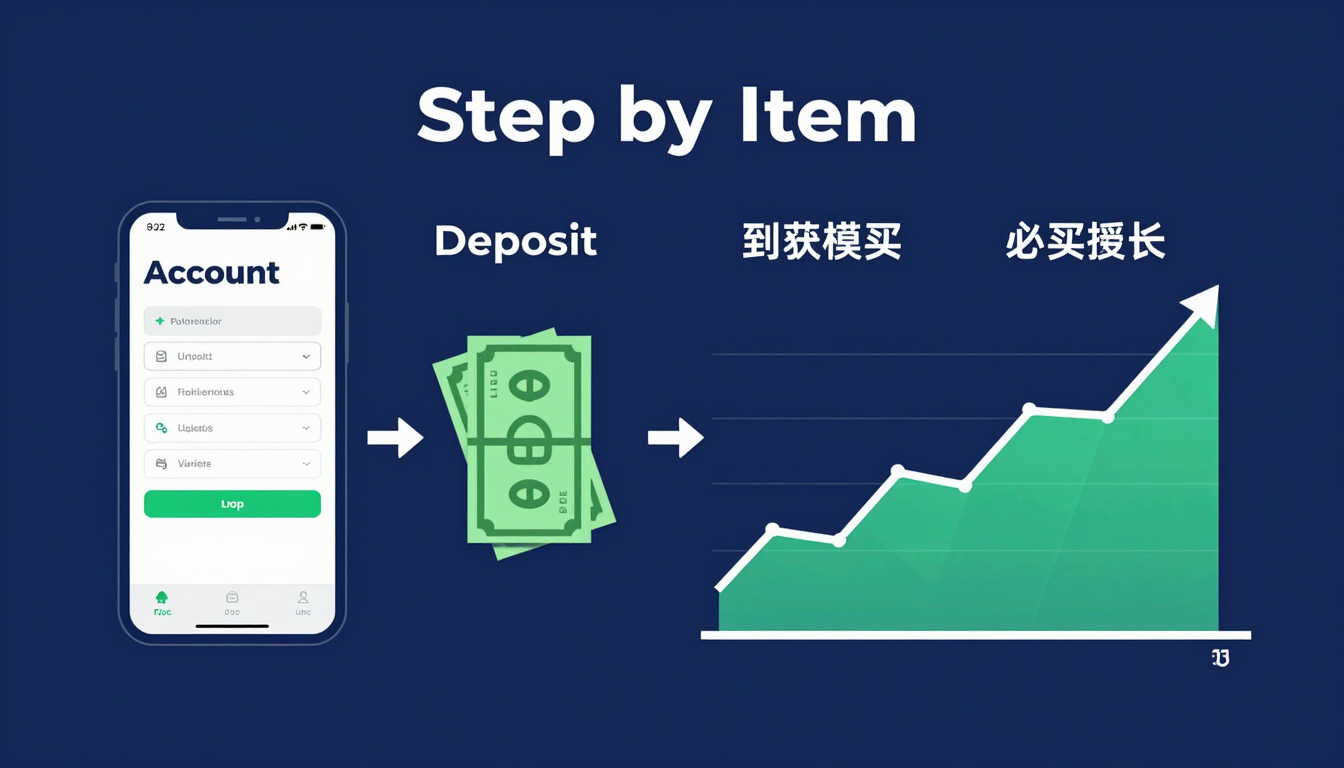
💳 Step 6: Fund Your Account
An approved account with $0 can’t buy anything. Fund it through one of these methods:
ACH Transfer (Most Common)
Link your bank account using your routing and account numbers. Free, but typically takes 2–5 business days to fully settle. Many brokers offer instant buying power — you can start trading immediately while the transfer is pending, up to a certain limit.
Wire Transfer
Faster (same-day or next-day) but usually costs $15–$30 per transfer. Useful for large initial deposits where speed matters.
Check Deposit
Mail a physical check or deposit via mobile check capture. Slower — typically 3–7 business days to clear. Rarely the best option but available.
Transfer from Another Broker (ACATS)
If you’re moving an existing account, use an ACATS (Automated Customer Account Transfer Service) transfer. Your new broker handles the paperwork. Takes 5–7 business days. Your investments transfer in-kind — you don’t have to sell them first.
There’s no required minimum for many brokers. Even $50 or $100 is enough to start with fractional shares. The psychological value of starting — even small — is significant. You’ll pay more attention to markets, learn faster, and build the habit of investing consistently.
📈 Step 7: Place Your First Trade
With funds in your account, you’re ready to invest. Here’s how a basic stock purchase works:
- 🔍 Search for the stock: Use the company name or ticker symbol (AAPL for Apple, VOO for Vanguard S&P 500 ETF)
- 📊 Review the stock page: Check the current price, recent performance, and any available research
- 🛒 Click “Buy” and choose your order type:
- Market order: Buys at the current market price. Executes immediately during market hours. Simple and suitable for most beginners.
- Limit order: Sets a maximum price you’re willing to pay. Only executes if the stock reaches your price. Useful when you want price control.
- Stop order / Stop-limit order: More advanced order types for managing downside risk. Not necessary to understand immediately.
- 💰 Enter the amount: Either the number of shares or the dollar amount (if fractional shares are available)
- ✅ Review and confirm: Double-check ticker symbol, amount, order type, and estimated cost before confirming
After your order executes, the shares appear in your portfolio. You’re now a shareholder. Congratulations — and resist the urge to check the price every 10 minutes.
⚠️ Common Mistakes That Cost Beginners Money
Mistake 1: Choosing a Broker Based on Marketing, Not Features
Flashy ads and celebrity endorsements don’t indicate quality. Research the actual features that matter for your investing style — fees, investment selection, tools, support — before committing.
Mistake 2: Not Taking Employer 401(k) Match
If your employer matches contributions up to 4% and you’re contributing 2%, you’re leaving free money on the table every paycheck. Max the match first — always.
Mistake 3: Confusing a Brokerage Account for a Savings Account
Money in a brokerage account is not FDIC-insured like a bank account. Cash held in brokerage accounts is covered by SIPC (Securities Investor Protection Corporation) up to $500,000 against broker failure — but not against investment losses. Never keep emergency funds in a brokerage account.
Mistake 4: Investing with Money You’ll Need Soon
Markets can fall 30–40% and stay down for years. Only invest money you genuinely won’t need for at least 3–5 years. Short-term money goes in high-yield savings accounts or CDs — not stocks.
Mistake 5: Over-Trading Early On
The temptation to react to every market move is strong for new investors. The data is clear: frequent trading underperforms buy-and-hold investing for most retail investors, primarily due to transaction costs, taxes on short-term gains, and poor market timing. Open your account, build your portfolio, and resist the urge to trade constantly.
Mistake 6: Ignoring Account Security
Your brokerage account contains real money. Use a unique, strong password. Enable two-factor authentication (2FA) immediately — most brokers require it but it’s worth double-checking. Never access your account on public WiFi without a VPN.
🔒 Understanding Account Protection
Before you fund your account, understand how your money is protected:
SIPC Protection: The Securities Investor Protection Corporation insures brokerage accounts up to $500,000 (including up to $250,000 in cash) against broker failure — not investment losses. If your broker goes bankrupt, SIPC ensures your investments are returned. Most major brokers also carry additional private insurance beyond SIPC limits.
What SIPC Does NOT Cover: Market losses. If your investments decline in value, that’s investment risk, not broker failure. SIPC is about protecting your assets from your broker’s insolvency — not from bad markets.
Choose regulated brokers: In the US, brokers must be registered with the SEC and FINRA. You can verify any broker’s registration at BrokerCheck (brokercheck.finra.org) before opening an account.
✅ Key Takeaways
- 🔹 A brokerage account is your gateway to financial markets — choose based on fees, features, and your investing style
- 🔹 Tax-advantaged accounts (Roth IRA, 401k) should typically be opened before taxable accounts for retirement savings
- 🔹 Major brokers (Fidelity, Schwab, IBKR) offer commission-free trading — don’t pay per-trade fees
- 🔹 Opening an account takes 10–20 minutes; have your ID, SSN, and bank info ready
- 🔹 Enable two-factor authentication immediately after opening
- 🔹 Fund with ACH transfer — free, just takes a few days to settle
- 🔹 Only invest money you won’t need for at least 3–5 years
- 🔹 SIPC protects against broker failure (up to $500K), not against market losses
- 🔹 Start small if needed — fractional shares let you invest any dollar amount
The hardest part of investing isn’t knowing what to buy. It’s starting. The account you open today — even funded with $100 — establishes the habit, the platform, and the psychology of an investor. The portfolio will grow from there.
🌍 Opening a Brokerage Account Outside the US
The guide above focuses primarily on US-based investors. If you’re investing from outside the US, the process differs but the principles remain the same. Here’s what international investors need to know:
Options for International Investors
Interactive Brokers (IBKR) is the gold standard for international access. Available in over 200 countries and territories, IBKR gives international investors direct access to US markets, plus exchanges in Europe, Asia, and beyond. The account opening process accommodates international identification documents and addresses.
Local brokers in your country may offer access to your home market with lower friction — no international wire fees, local-language support, and familiarity with local tax rules. Many now offer international market access as well. Research your country’s equivalent to Fidelity or Schwab.
Global neo-brokers like eToro, Trading 212, and Saxo Bank serve international clients across multiple countries with clean apps and reasonable fee structures. Research availability and regulation in your specific country before opening.
Tax Considerations for International Investors
Investing in US markets from abroad introduces cross-border tax complexity. The US imposes a 30% withholding tax on dividends paid to foreign investors — though tax treaties between the US and many countries reduce this rate significantly (often to 15%). Check whether your country has a tax treaty with the US at IRS.gov.
Capital gains from selling US stocks may or may not be taxable in your home country depending on local laws. Consult a tax professional familiar with cross-border investing before making substantial investments in foreign markets.
📊 After You Open: Building Your First Portfolio
Your account is open, funded, and ready. The most common question that follows: “What do I actually buy?”
The answer depends on your goals, timeline, and risk tolerance — but here are the most sensible starting points for different investor types:
The Simplest Approach: One Fund
A single broad-market ETF like VTI (Vanguard Total Stock Market ETF) or VOO (Vanguard S&P 500 ETF) gives you instant diversification across hundreds or thousands of companies in one trade. This approach — championed by Warren Buffett for non-professional investors — requires minimal research, has minimal fees, and has historically outperformed most active stock pickers over 10+ year periods.
The Three-Fund Portfolio
A slightly more sophisticated approach that covers the global market:
- US stocks (VTI or SCHB): 60% of your investment portfolio
- International stocks (VXUS or IXUS): 30% for geographic diversification
- Bonds (BND or AGG): 10% for stability (adjust based on your risk tolerance and age)
Rebalance annually back to your target allocation. That’s it. This simple three-fund structure has formed the foundation of retirement portfolios for decades.
Individual Stock Picking
If you want to research and select individual companies, that’s a valid path — but approach it as a learning process and risk management exercise. Keep individual stock picks to a minority of your portfolio (20–30%) while maintaining broad diversification through ETFs for the majority. This lets you participate in individual company growth while protecting against the catastrophic risk of a concentrated position.
For a detailed guide on evaluating individual companies and building a diversified stock portfolio, see our comprehensive resources on how to find the best stocks to invest in and stock investment strategies that work.
🔄 Setting Up Recurring Investments: The Automation Advantage
The most powerful thing you can do after opening your account isn’t picking the perfect stock — it’s setting up automatic recurring investments.
Most major brokers allow you to schedule automatic purchases: every week, every two weeks, or every month, a fixed dollar amount automatically buys your chosen ETF or stock. This implements dollar-cost averaging (DCA) without any active effort on your part.
The psychological and mathematical benefits are substantial:
- You buy more shares when prices are low and fewer when prices are high — naturally averaging down your cost
- You eliminate the temptation to time the market
- You build the investing habit without requiring willpower each month
- You treat investing like a bill — a non-negotiable regular expense — rather than something you do “when you have extra money”
Investors who automate contributions consistently outperform those who invest manually, largely because they stay invested through market turbulence instead of pausing contributions during crashes — precisely when buying is most advantageous.
Set it up on day one. Even $50 or $100 per month, invested consistently in a diversified ETF over 20–30 years, produces remarkable outcomes through the power of compounding. For a complete walkthrough of investment strategies and how to structure your portfolio for long-term growth, read our detailed guide on how to invest in stocks step by step.
❓ Frequently Asked Questions
How long does it take to open a brokerage account?
The application itself takes 10–20 minutes. Instant approval is common with major brokers like Fidelity and Schwab. Manual identity verification can add 1–3 business days. Funding via ACH bank transfer takes 2–5 business days to fully settle, though many brokers offer instant buying power while the transfer clears.
Is there a minimum amount to open a brokerage account?
Most major brokers have eliminated minimum account balances entirely. Fidelity, Schwab, and Robinhood all require $0 to open. Some specialty platforms and mutual funds still require minimums of $500–$3,000. If minimum requirements are a barrier, start with zero-minimum brokers and build from there.
Can I have multiple brokerage accounts?
Yes — there’s no legal limit on the number of brokerage accounts you can hold. Many investors have a Roth IRA at one broker, a taxable account at another, and a 401(k) through their employer. The main consideration is whether you can effectively monitor and manage multiple accounts. For most beginners, consolidating at one or two brokers keeps things manageable.
What happens to my investments if my broker goes bankrupt?
Your investments are held separately from your broker’s assets under SEC regulations — they don’t become part of the broker’s estate if it fails. SIPC insurance covers up to $500,000 in securities and $250,000 in cash during a broker insolvency. In practice, SIPC liquidations return investor assets. The risk of a major regulated broker failing and taking investor assets is extremely low — but understand the protection structure before you invest.
Do I need a Social Security Number to open a brokerage account?
For US residents, yes — brokers are required to collect your SSN or ITIN for tax reporting purposes. Foreign nationals living in the US who don’t have an SSN can use an ITIN. Non-US residents investing through US brokers typically provide their home country tax ID and passport. Some international brokers operate outside the SSN requirement for foreign investors.
Can I open a brokerage account as a minor?
Minors cannot open brokerage accounts independently. However, custodial accounts (UGMA/UTMA) allow parents or guardians to open and manage investment accounts on behalf of a minor. The assets legally transfer to the minor when they reach adulthood (typically 18 or 21 depending on the state). Custodial Roth IRAs are also available for minors who have earned income.
Leave a Reply