
Every quarter, millions of investors wake up to find money sitting in their brokerage accounts — money they didn’t earn by working, trading, or making any decision at all. Their stocks simply paid them.
That’s the core promise of dividend investing: own pieces of businesses that share their profits with you, regularly and predictably, for as long as you hold them.
It sounds almost too simple. And in many ways, it is simple — but not easy. The difference matters. Getting dividend investing right means understanding which yields to trust, how dividends compound over time, and why chasing the highest payout is often the fastest path to losing both the income and the principal.
This guide covers everything: how dividends work mechanically, what separates a sustainable dividend from a yield trap, how to build a portfolio designed for growing income, and the metrics that actually predict dividend reliability.
What Is a Dividend — and Why Do Companies Pay Them?
A dividend is a cash distribution a company pays to shareholders, typically from its profits. When you own 100 shares of a company paying $2 per share annually, you receive $200 per year — regardless of what the stock price does on any given day.
Most U.S. companies pay dividends quarterly. Some pay monthly (REITs and certain funds). A few pay annually or semi-annually, more common outside the U.S.
Why Companies Pay Dividends
- Mature businesses with more cash than reinvestment opportunities — A utility company can’t build an infinite number of power plants. The excess cash goes to shareholders.
- Shareholder return programs — Boards use dividends to compete for income-focused investors, particularly institutional funds with income mandates.
- Signaling confidence — A management team willing to commit to a dividend is implicitly saying: “We’re confident in our future earnings.” Cutting a dividend is painful and publicly embarrassing — so companies only start one if they believe they can sustain it.
The 4 Critical Dates Every Dividend Investor Must Know
| Date | What It Means | Why It Matters |
|---|---|---|
| Declaration Date | Board announces the dividend amount and payment schedule | First confirmation of the payout |
| Ex-Dividend Date | First day you must already own shares to receive the dividend | Buy on or after this date → you don’t get paid this cycle |
| Record Date | Company takes a snapshot of shareholders on its books | Usually 1 business day after ex-date |
| Payment Date | Cash actually hits your account | Typically 2–4 weeks after ex-date |
Key rule: You must own the stock before the ex-dividend date to receive the upcoming dividend. Buying on the ex-date means you’ll wait for the next cycle.
How Dividend Investing Actually Generates Wealth
Dividends generate returns in two ways that compound on each other over time.
1. Cash Income (The Obvious Part)
If you own $100,000 in dividend stocks yielding 3.5%, you collect $3,500 per year in cash. That’s $292 per month arriving in your account whether markets are up, down, or sideways.
2. Dividend Reinvestment (The Compounding Engine)
When you reinvest dividends — using each payment to buy more shares — your position compounds automatically. More shares = more dividends = even more shares. This is the mechanism behind one of the most quoted statistics in investing:
Dividend reinvestment has historically accounted for roughly 40% of the S&P 500’s total returns over long periods. The price appreciation gets the headlines; reinvested dividends do much of the actual work.
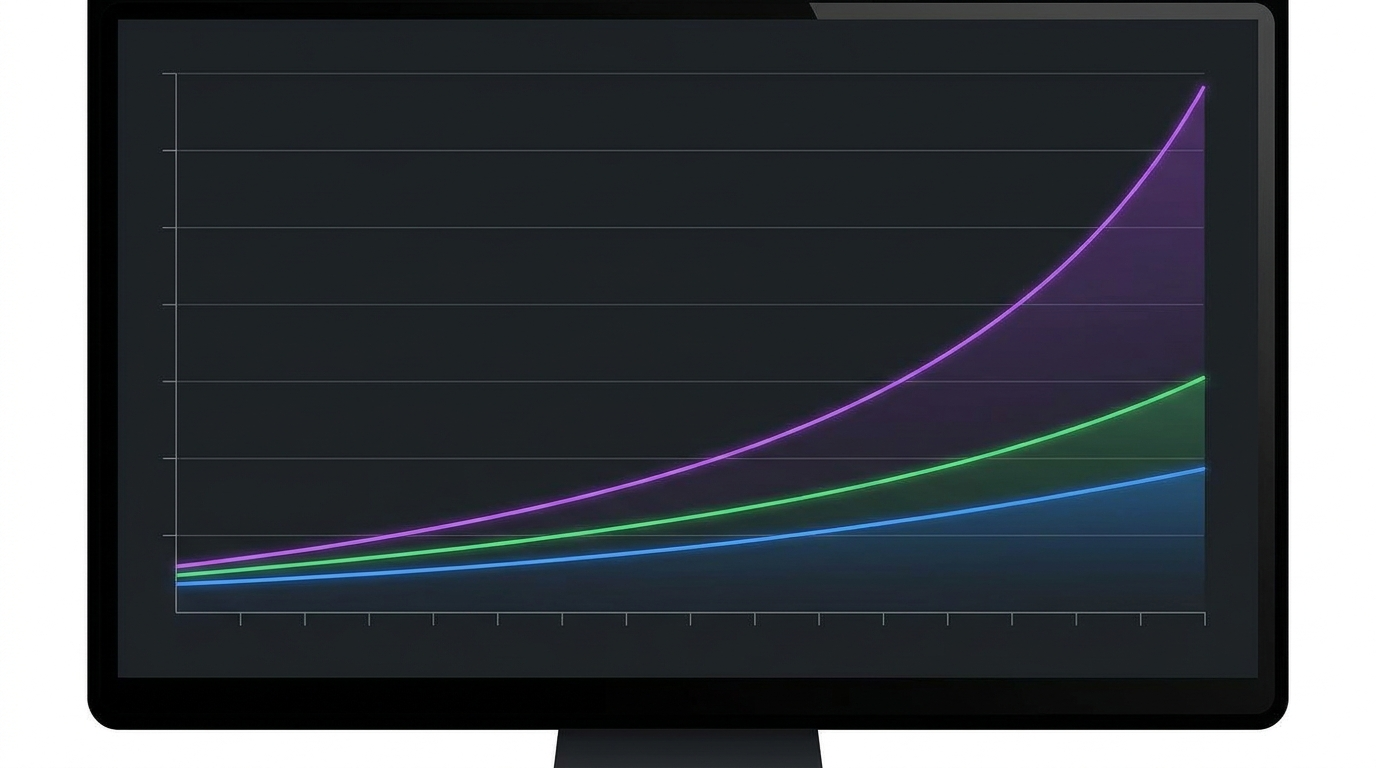
The Math of Dividend Reinvestment Over 20 Years
| Scenario | Starting Investment | Annual Yield | Price Growth | 20-Year Value |
|---|---|---|---|---|
| No dividends | $50,000 | 0% | 7% | $193,484 |
| Dividends taken as cash | $50,000 | 3% | 5% | $132,665 + $58,200 cash |
| Dividends reinvested | $50,000 | 3% | 5% | $261,743 |
The 5 Core Metrics for Evaluating Dividend Stocks
Not all dividends are created equal. These five metrics separate sustainable dividends from payout traps.
1. Dividend Yield
Formula: Annual Dividend Per Share ÷ Current Stock Price × 100
If a stock pays $2 annually and trades at $50, the yield is 4%.
Danger zone: Yields above 6–7% in most sectors warrant serious investigation. High yield is sometimes a warning signal, not a reward.
2. Dividend Payout Ratio
Formula: Annual Dividends Per Share ÷ Earnings Per Share × 100
| Payout Ratio | Signal | Context |
|---|---|---|
| Under 40% | Very conservative | Plenty of room to raise dividend, strong safety margin |
| 40–60% | Balanced | Typical for established dividend payers |
| 60–80% | Moderate concern | Less flexibility; watch earnings trends closely |
| Over 80% | Elevated risk | Any earnings weakness could force a cut |
| Over 100% | Paying from debt or reserves | Unsustainable unless company has a plan to fix it |
Exception: REITs use FFO (Funds from Operations) rather than GAAP earnings. Payout ratios of 70–90% based on FFO are normal and often healthy for REITs.
3. Dividend Growth Rate
A company that raised its dividend by 8% per year for the last 10 years is usually more valuable to a long-term investor than one offering a 6% yield with flat growth.
Why growth matters: Assume you bought a stock 10 years ago yielding 2.5%. If it grew dividends at 10% annually, your yield-on-cost today is roughly 6.5% — based on what you originally paid. This is the real power of dividend growth investing.
4. Free Cash Flow Coverage
Earnings can be manipulated. Free cash flow (operating cash flow minus capital expenditures) is harder to fake — it’s real money in the bank.
FCF Payout Ratio Formula: Annual Dividends Paid ÷ Free Cash Flow × 100
Always check FCF coverage alongside the reported payout ratio, especially for capital-intensive businesses.
5. Dividend Track Record
- Dividend Aristocrats — S&P 500 companies that have raised dividends for 25+ consecutive years (67 companies as of 2024)
- Dividend Kings — Companies with 50+ consecutive years of dividend increases (fewer than 55 companies qualify)
The 4 Main Dividend Investing Strategies
Strategy 1: High-Yield Income Investing
Goal: Maximum current income | Typical yield target: 4–7%+ | Best for: Retirees who need income now
Screening filters:
- Yield 4–7% (anything above 7% requires extra scrutiny)
- Payout ratio under 75%
- Positive free cash flow
- Debt-to-equity below 2.0
- At least 5 years of maintained or growing dividends
Strategy 2: Dividend Growth Investing
Goal: Lower yield now, rapidly growing income over time | Typical yield target: 1.5–3.5% | Best for: Younger investors building toward future income
A stock yielding 2% that grows dividends at 10% per year will yield roughly 5.2% on your original investment in 10 years and 13.5% in 20 years.
Strategy 3: DRIP Investing
Goal: Automatic compounding | Best for: Hands-off investors
DRIP (Dividend Reinvestment Plan) investing means automatically reinvesting every dividend payment into additional shares. During market downturns, your dividends buy more shares at lower prices, effectively increasing your future income base.
Strategy 4: Dividend Aristocrats & Kings Focus
Goal: Quality and track record above all | Best for: Conservative investors
ETFs like NOBL (ProShares S&P 500 Dividend Aristocrats) or VIG (Vanguard Dividend Appreciation) offer diversified exposure to dividend growers without individual stock picking.
Sectors and Industries That Drive Dividend Portfolios
| Sector | Typical Yield Range | Growth Potential | Key Characteristics |
|---|---|---|---|
| Utilities | 3–5% | Low (3–5%) | Regulated monopolies, very stable cash flows |
| Consumer Staples | 2–4% | Medium (5–8%) | Branded goods, pricing power, consistent demand |
| Healthcare | 1.5–4% | Medium-High | Aging demographics tailwind, patent-protected earnings |
| REITs | 4–7% | Low-Medium | Required to pay 90%+ of taxable income, rate sensitive |
| Financials | 2–4% | Medium | Banks, insurance; cyclical but often consistent payers |
| Energy (Midstream) | 4–7% | Medium | Pipelines with toll-road economics, fee-based income |
| Technology | 0.5–2% | High (10%+) | New to dividends but growing them fast |
| Industrials | 1.5–3% | Medium-High | Diversified businesses, many Dividend Aristocrats |

The 3 Dividend Traps to Avoid
Trap 1: The Yield Trap
A stock yields 9% and looks incredible. Then you notice: the yield was 3% a year ago. The stock hasn’t become more generous — it’s fallen 65%. The high yield is a symptom of market concern.
Warning signs: Yield significantly above sector peers | Payout ratio above 85% | FCF doesn’t cover dividend | Debt rising while revenue is flat
Trap 2: The Special Dividend Mirage
Companies sometimes declare “special dividends” — one-time large payments from asset sales. Always distinguish regular dividends from special ones before building income expectations around a yield figure.
Trap 3: The Dividend Cut Trap
When a company cuts its dividend, two things happen simultaneously: you receive less income AND the stock price falls sharply. You lose on both dimensions at once.
Dividend Investing vs. Growth Investing: The Trade-Off
In our guide on growth investing, we covered why investors accept zero current yield in exchange for explosive long-term appreciation. Dividend investing sits at the other end — current income and predictability over potential explosive upside.
| Dimension | Dividend Investing | Growth Investing |
|---|---|---|
| Income today | ✅ Substantial | ❌ Minimal to none |
| Drawdown protection | ✅ Income continues in downturns | ❌ No floor from income |
| Inflation protection | ⚠️ Depends on dividend growth rate | ✅ Growing businesses often outpace inflation |
| Tax efficiency | ⚠️ Dividends taxed annually | ✅ Capital gains deferred until sale |
| Long-term upside | ⚠️ Capped by mature business profiles | ✅ Compounding on large TAM opportunities |
| Behavioral advantage | ✅ Income reinforces holding through volatility | ❌ No income cushion during drawdowns |
Many investors find the ideal answer in combining both approaches — as outlined in our guide on stock investment strategies.
Building Your Dividend Portfolio: A Step-by-Step Framework
Step 1: Define Your Income Goal
If you want $3,000/month ($36,000/year) at a 3.5% portfolio yield, you need approximately $1,030,000 in dividend-paying stocks. That’s your target. Work backwards to a savings rate and time horizon.
Step 2: Choose Your Strategy
- Need income soon (within 5 years): High-yield strategy, 4–6% yield target
- Building long-term (10+ years): Dividend growth strategy, 2–3% yield with 8–10% growth
- Want both: Core-satellite approach — 60% dividend growers, 40% higher-yield
Step 3: Screen for Quality
- Dividend yield: 2–5%
- Payout ratio: under 70%
- 5-year dividend growth rate: positive
- Market cap: above $5 billion
- Debt-to-equity: below 1.5
Step 4: Diversify Across Sectors
A robust dividend portfolio spans 5–8 sectors and 20–30 individual stocks. Concentration in one sector creates hidden risk — a single event can impact a large portion of your income at once.
Step 5: Monitor for Dividend Safety
Monitor quarterly: Is the payout ratio creeping up? Is free cash flow declining? Is management rhetoric around the dividend changing? A dividend cut is almost never a surprise to careful observers — warning signs appear 1–4 quarters before the formal announcement.
Tax Considerations for Dividend Investors
| Type | Tax Rate | Applies To |
|---|---|---|
| Qualified Dividends | 0%, 15%, or 20% (long-term capital gains rate) | Most U.S. corporation dividends held 60+ days |
| Ordinary Dividends | Up to 37% (regular income rate) | REIT dividends, MLP distributions, most foreign stocks |
Tax optimization: Hold REITs and high-yield in tax-advantaged accounts (IRA, 401k). Hold qualified-dividend stocks in taxable accounts for the favorable 15% rate.
Dividend ETFs: The Passive Approach
| ETF | Focus | Yield (~) | Expense Ratio |
|---|---|---|---|
| VYM | High current yield | ~3.0% | 0.06% |
| VIG | Dividend growth | ~1.8% | 0.06% |
| NOBL | Aristocrats only | ~2.1% | 0.35% |
| DVY | High yield, diversified | ~3.8% | 0.38% |
| SCHD | Quality + yield hybrid | ~3.4% | 0.06% |
Common Questions About Dividend Investing
Is dividend investing better than growth investing?
Neither is universally better. Your timeline, income needs, and behavioral tendencies should drive the allocation. Most serious investors use elements of both.
How much money do I need to start?
You can start with any amount. Fractional shares at most modern brokers mean you can own $50 worth of a $200 stock. Starting early with any amount beats waiting for a “right” threshold.
Should I reinvest dividends or take them as cash?
In the accumulation phase, reinvesting almost always produces better long-term outcomes. In the distribution phase (actively using income), taking cash makes sense.
What is a safe dividend yield?
There’s no single “safe” number — it’s sector and context dependent. Focus on payout ratio and FCF coverage more than yield alone. A 5% yield on a pipeline with stable fee-based income may be safe; a 5% yield on a deteriorating retailer may be a trap.
Do dividends get cut during recessions?
Some do. In 2020, roughly 40% of S&P 500 dividend payers cut or suspended dividends. But Dividend Aristocrats and Kings had no cuts as a group. Quality screening substantially reduces recession risk.
Can I live off dividends?
Yes — but it requires significant capital. At 3.5% yield, you need approximately $286,000 invested per $10,000/year in dividends. Living off $60,000/year requires roughly $1.7 million. This is a legitimate long-term goal many investors have achieved.
The Dividend Investor’s Checklist
- ✅ Is the yield above sector average? (If yes, understand why)
- ✅ Is the payout ratio below 70%?
- ✅ Does free cash flow comfortably cover the dividend?
- ✅ Has the dividend grown for at least 5 consecutive years?
- ✅ Is the company’s debt load manageable relative to earnings?
- ✅ Is the core business durable — pricing power, recurring revenue, or structural moat?
- ✅ Am I diversified across sectors so no single event can cut 40%+ of my income?
Dividend investing rewards patience, discipline, and careful selection. No explosive moves, no viral stories, no “10x in 6 months.” Just compounding cash flows that, year after year, grow into a self-sustaining income machine.
That’s not boring. That’s the point.
📚 Continue Building Your Investment Knowledge
Dividend investing is one of three core approaches in the P3 group. For the complete picture:
- Value Investing — buying quality businesses at a discount to intrinsic value
- Growth Investing — finding companies that compound earnings over decades
- Stock Investment Strategies — how to combine all five approaches into a cohesive framework
Leave a Reply